EXCELLERAT Academia Lounge at Vehicle Tech Week Europe 2026: Connecting Research and Industry
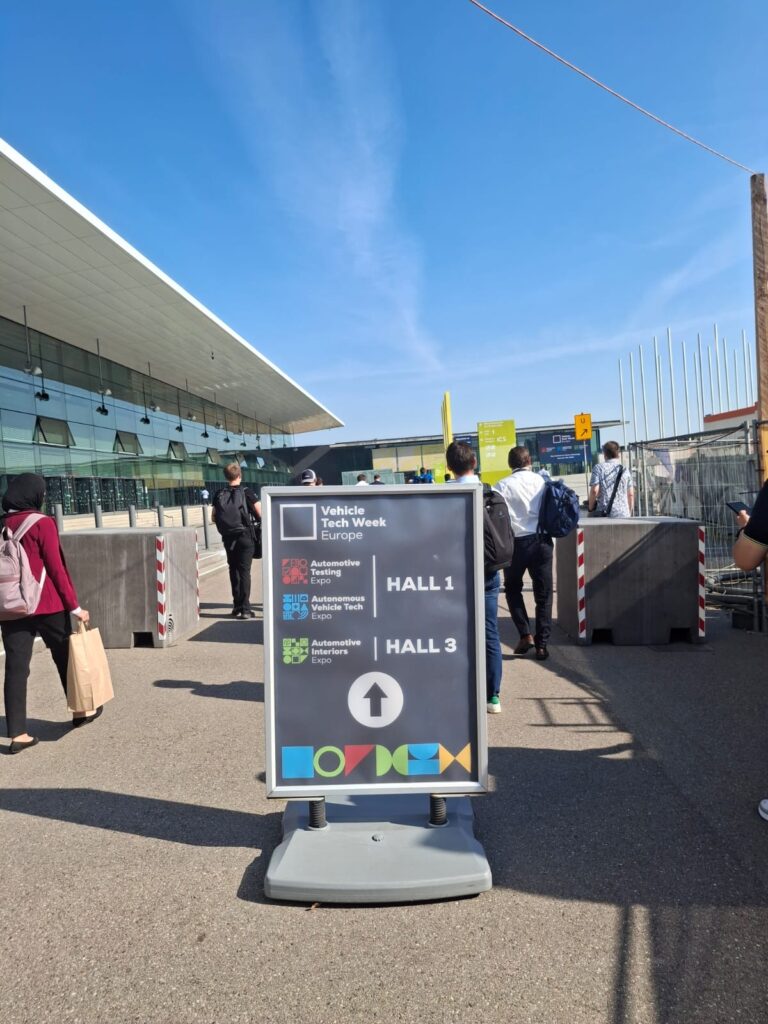
After three intensive and inspiring days at Vehicle Tech Week Europe 2026 in Stuttgart, we can look back on a very successful edition of the EXCELLERAT Academia Lounge and our Industry–Academia Collaboration activities.
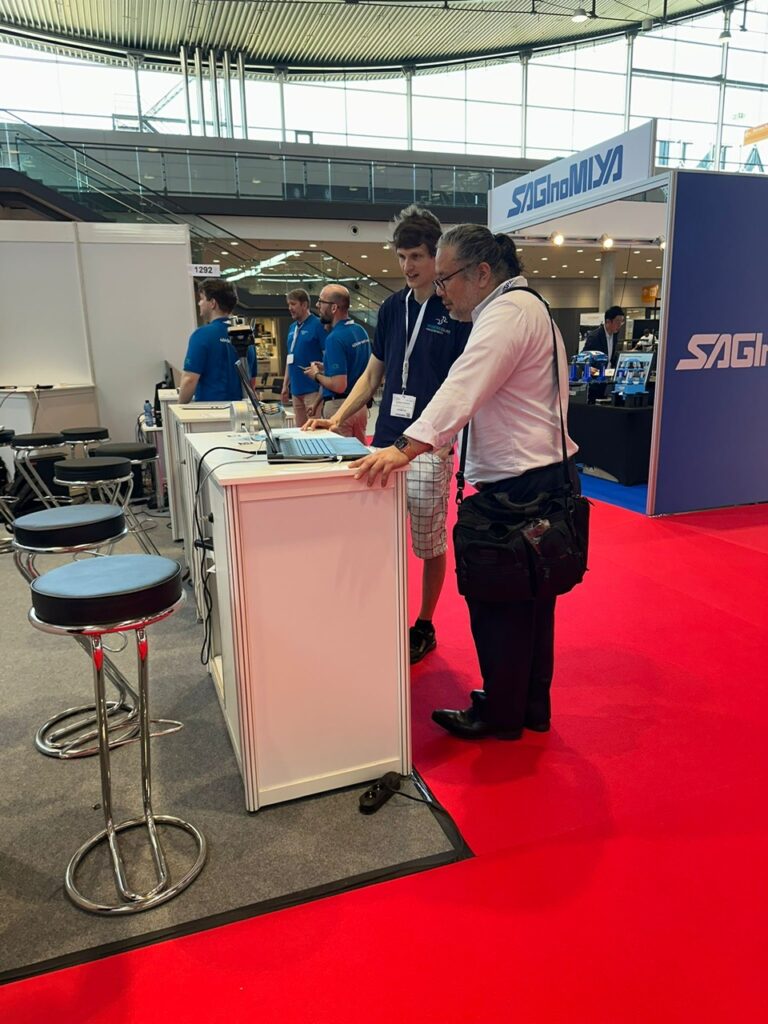
During the event, our stand welcomed more than 150 industry contacts, confirming once again the strong interest of the automotive sector in engaging directly with European research organisations and universities. We also had the honour of presenting EXCELLERAT P2 and its activities during the conference programme, as well as introducing our Academia Lounge concept: a dedicated space where researchers, universities, research centres, and industrial stakeholders can meet, exchange ideas, and explore future collaborations.
The discussions with managing directors, business developers, product managers, engineers, and technical experts showed very clearly that the automotive industry is undergoing a major transformation. Development cycles are becoming faster, technologies are becoming more complex, and companies are looking for new ways to innovate, reduce costs, improve efficiency, and develop new business models.
Creating a Space for Dialogue
One of the strongest takeaways from the event was the importance of direct dialogue between academia and industry. Too often, researchers and companies operate in separate worlds. Researchers develop excellent scientific results, methods, software, models, and technologies, while companies face concrete industrial challenges and urgent needs for applicable solutions.
The Academia Lounge helped bring these two perspectives together. For researchers, it was an opportunity to better understand real industrial problems, constraints, and expectations. For companies, it was a chance to discover what European research teams are developing and to identify emerging technologies at an early stage. These exchanges are essential if research results are to move beyond publications and project reports and become the basis for future innovations.
The event also highlighted the importance of new professional roles within universities and research organisations. Innovation managers, business development managers, communication experts, dissemination managers, and technology transfer professionals play a crucial role in supporting researchers when they engage with industry. They help translate scientific expertise into language that is accessible and relevant for industrial stakeholders, facilitate contacts, and identify possible collaboration opportunities.
This will be an important challenge for European universities in the coming years. Excellent research alone is not enough if results remain unused or insufficiently developed after the end of research projects. Researchers need support to increase the readiness level of their results, communicate them effectively, understand industry needs, and develop pathways towards application, validation, and exploitation.
Increasing the Visibility of the EuroHPC Ecosystem
The discussions also showed that many companies are still not sufficiently informed about the broad range of activities, services, and support mechanisms developed within the EuroHPC ecosystem. We therefore used the opportunity to present not only EXCELLERAT P2, but also to raise awareness of other European initiatives, Centres of Excellence, EuroCC, and FFplus activities.
This confirmed how important it is to communicate the EuroHPC offer more actively to the outside world. European industry needs to know what has been planned, funded, and developed by the European community to support its digital transformation, competitiveness, and innovation capacity.
Key Topics and Highlights
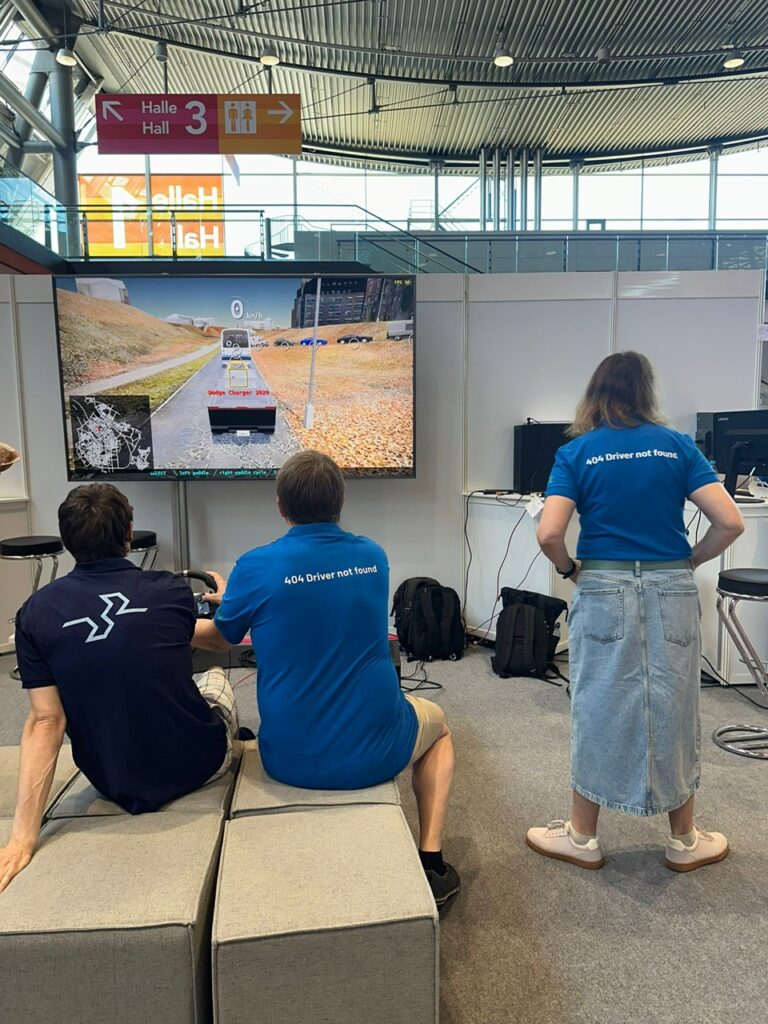
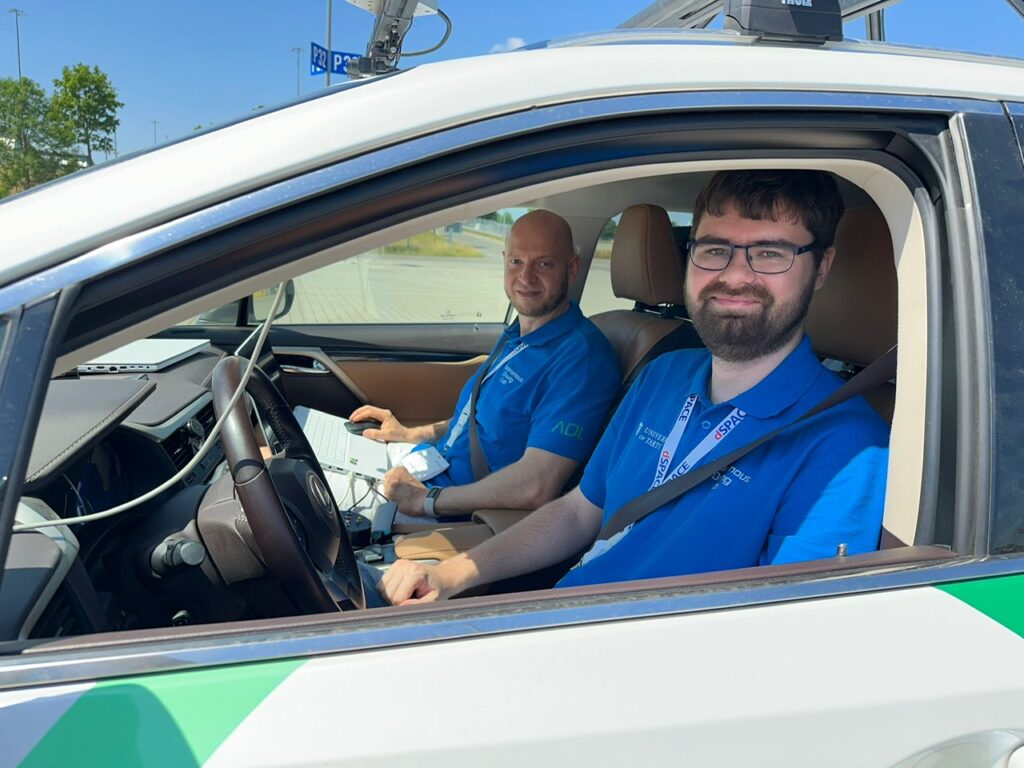
A major highlight this year was the participation of a new partner: the University of Tartu, Institute of Computer Science – Autonomous Driving Lab from Estonia. The team travelled from Tartu with its autonomous demonstration vehicle and presented its expertise directly at the stand, supported by a demo monitor showing concrete developments in autonomous mobility. Their presence attracted strong interest and created many opportunities to discuss autonomous driving, data-driven mobility, vehicle intelligence, and future testing environments for self-driving technologies.
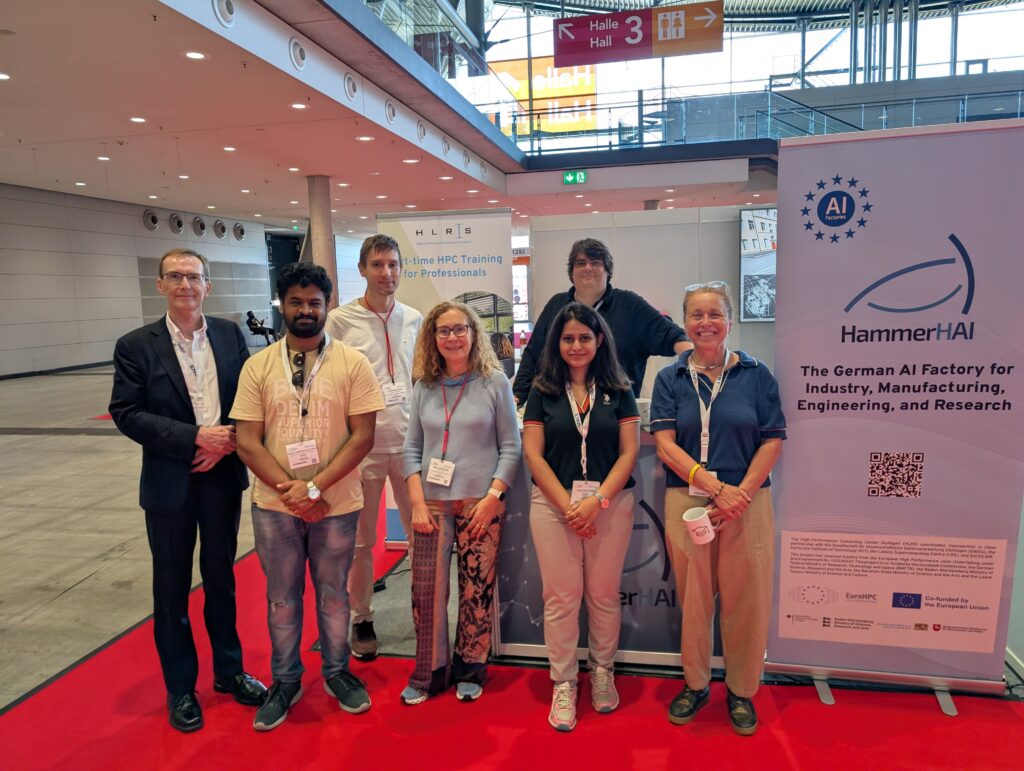
Artificial intelligence and data were also central topics throughout the event. The AI Factories from Sweden and Germany, including Mimer AI Factory and HammerHAI, contributed to discussions on how AI models can be developed from the growing volumes of data generated in automotive contexts. These data may come from autonomous systems, testing processes, acoustic measurements, component validation, or simulation workflows. Companies are increasingly aware that they need to make better use of their data to improve processes, increase product quality, and potentially create new AI-based services and business models.
Simulation, high-performance computing, visualization, and digital twins formed another important thematic area. Several companies are already exploring virtual simulation solutions to test products earlier in the development process. The long-term vision is to integrate testing and validation much earlier in engineering workflows, reduce the need for physical prototypes, and support a faster transition from validated digital models to production.
The University of Stuttgart, represented through HLRS – High-Performance Computing Center Stuttgart, EXCELLERAT P2, and MPA, contributed its expertise in high-performance computing, large-scale simulation workflows, data processing, visualization, and materials innovation. TU Mannheim contributed to discussions on data, digital twins, digital transformation, and industry-oriented innovation topics. HammerHAI researchers also brought expertise on the post-processing of simulation and industrial data, showing how simulation outputs can be transformed into knowledge and used to support the development of AI models.
Acoustics was another important topic, particularly in relation to vehicle interiors, comfort, sound quality, and user experience. As vehicles become increasingly electric, autonomous, and software-defined, acoustic performance is becoming more strategically relevant for the automotive industry.
Building Future Collaborations
Beyond the many industry conversations, the event was also a valuable opportunity for the participating partners to connect with each other. One promising exchange took place between the AI Factories and the University of Tartu’s Autonomous Driving Lab, opening the possibility of developing a future workshop on autonomous vehicles. This would build on the same spirit of cooperation already demonstrated in previous exchanges, such as the workshop developed between MPA Universität Stuttgart and HammerHAI.
Overall, Vehicle Tech Week Europe 2026 confirmed that testing, validation, simulation, AI, data analytics, materials innovation, acoustics, high-performance computing, visualization, digital twins, and autonomous driving are increasingly interconnected. The more than 150 contacts established during the three days show that industry is not only interested in individual technologies, but also in understanding how research and collaboration with universities can help create faster, smarter, and more sustainable development processes.
We would like to express our sincere gratitude to the event organisers. For the third year, they provided us with a 40 m² exhibition area free of charge. This support is extremely valuable and makes our participation possible. Without it, we would not have the budget to take part in such important industry fairs. Yet these fairs are essential, because this is where industry comes together, and where researchers have the opportunity to meet the industrial community directly. We would also like to thank all participating partners for their valuable contributions.
2 Responses